Enterprise finance systems don't fail at setup. They fail over time.
Processes fragment. Exceptions accumulate. Manual intervention becomes the system. Companies build layers to prevent this.
Where NAP sits
The execution layer between your stack and your operations.
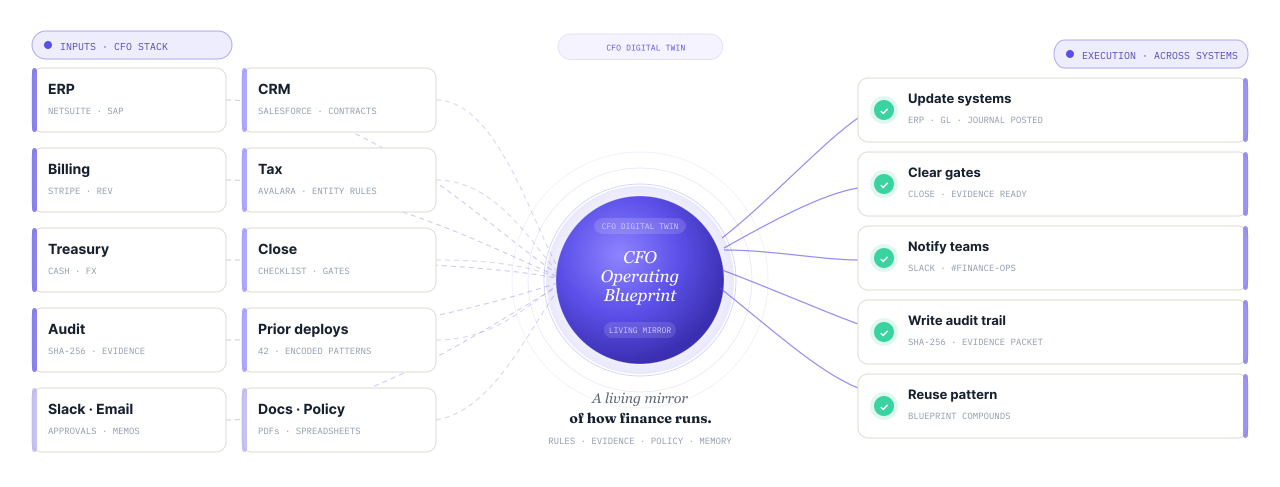
A living mirror of how finance runs
The shift
That layer was never software
That layer used to be consultants, SI teams, iPaaS workflows, and systems SMEs. NAP turns that delivery layer into software.
NAP is the system that runs the CFO stack.
Not integration
Not automation
Not an AI assistant
2,200+
Production patterns encoded
48
Retry-unsafe finance endpoints identified
120
Dependency chains encoded
25
Async-success paths tracked
42
Deployments executed. Every pattern encoded. Starts from prior deployments — not configuration.
1,900
Failure modes mapped across 22 ERP systems. Already observed in production. Applied before your first deployment starts.
95%
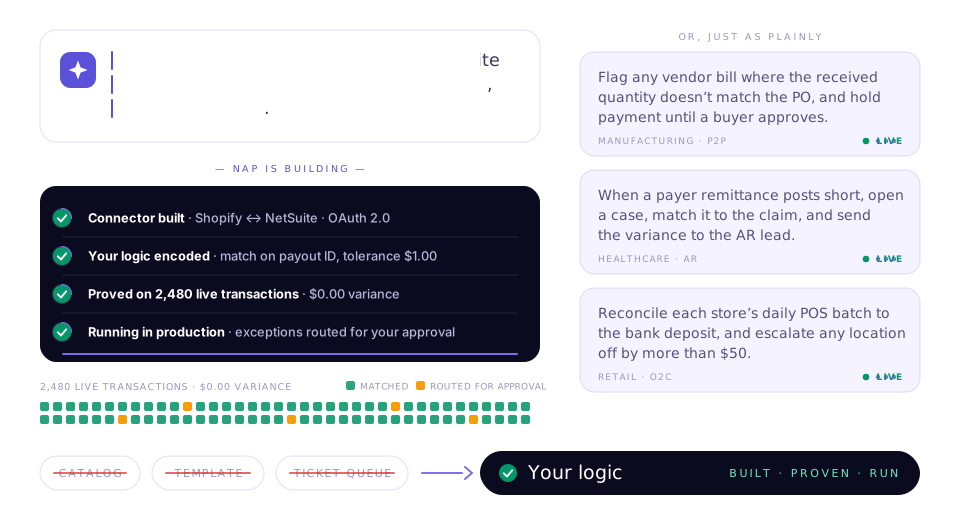
Deterministic code. Intelligence activates only at decision points. Every action logged. Every decision auditable.
Most finance automation does not fail visibly. It continues running — while correctness degrades underneath it.
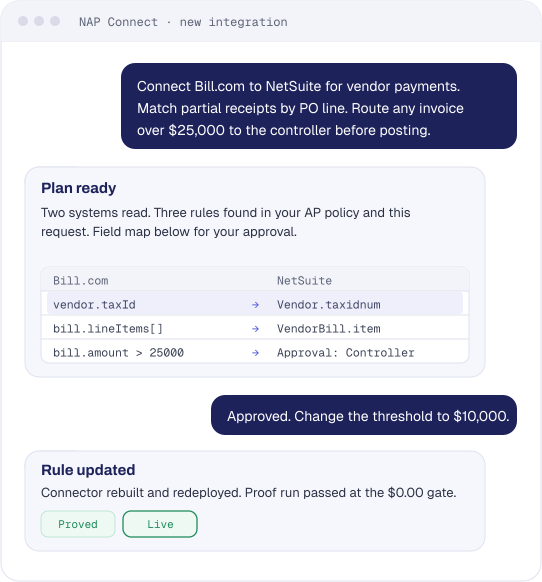
A real AP workflow · how systems actually break
A CFO Workflow Breaks Between Systems
Nothing breaks immediately.The system slowly fragments into edge cases.
In one deployment: 3-week close delay · 1,200 invoices manually reconciled
NAP Enforces CFO Operating Logic Across Evidence, Policy, Controls, And Systems. Resolves exceptions, encodes the outcome, and applies it across future transactions.
Core insight
This is not a workflow problem. It is an execution problem.
Nothing breaks immediately.The system slowly fragments into edge cases.
In production
10 days.Already running.
Mid-market manufacturer. Multi-entity NetSuite. AP workflows varying across 6 subsidiaries. Intercompany transfers breaking reconciliation. The migration had already failed once.